.webp)
Tree Felling 101: Your No-Nonsense Guide to Safe Tree Removal

Why Cutting Trees Down Should Be Left to the Professionals
Cutting trees down is one of the most dangerous tasks a property owner can face. According to OSHA, more people are killed while felling trees than any other logging activity. What might seem like a straightforward weekend project is actually a complex operation requiring specialized training, equipment, and expertise.
If you're considering tree removal, here's what you need to know:
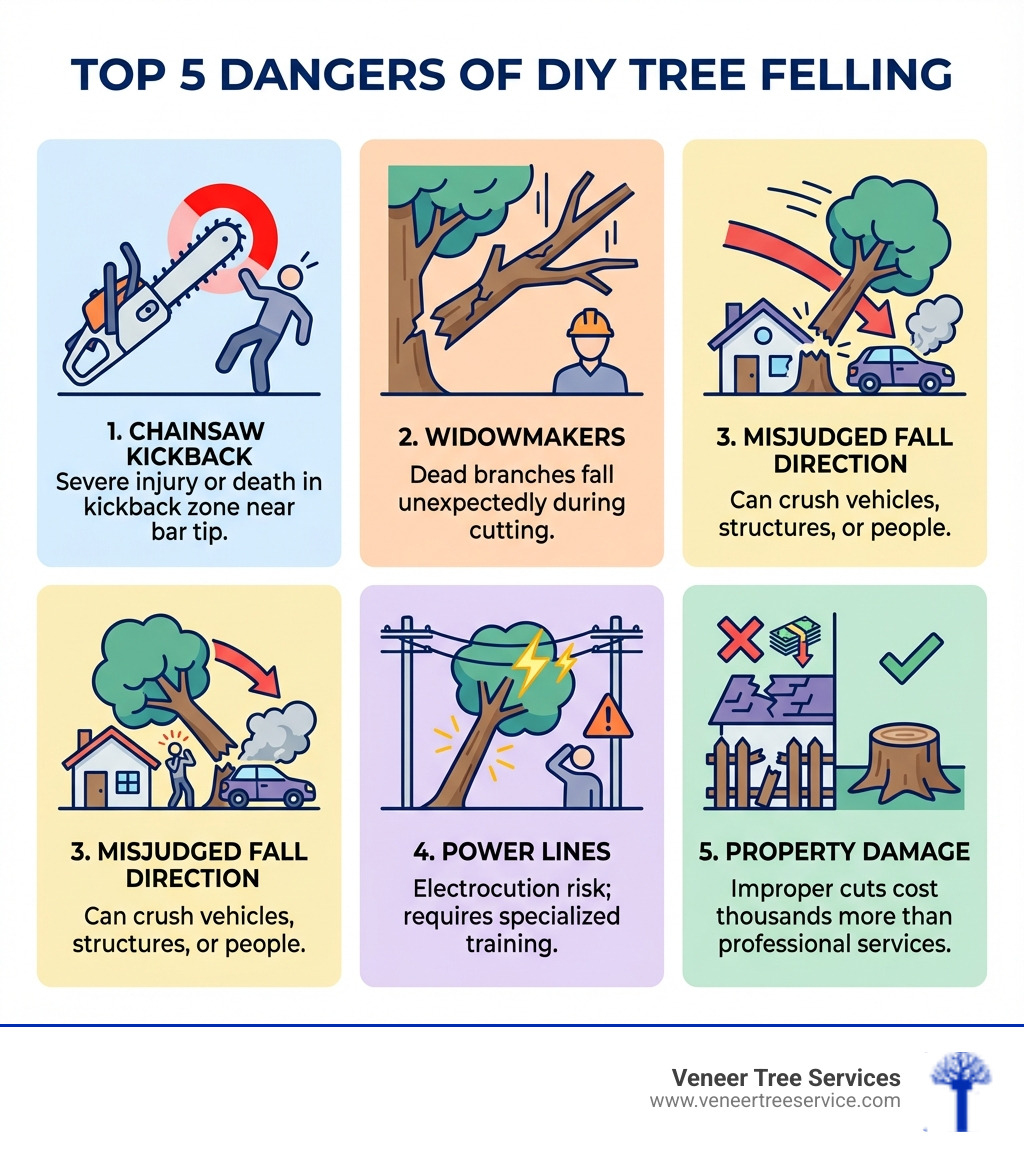
- Professional Assessment Required - Trees must be evaluated for disease, rot, lean, and hazards like dead branches ("widowmakers")
- Specialized Equipment Needed - Professional-grade chainsaws, felling wedges, ropes, and safety gear are essential
- Precise Cutting Techniques - Three strategic cuts (notch, back cut, hinge) control the fall direction
- Significant Safety Risks - Chainsaw kickback, falling branches, power lines, and property damage pose serious threats
- Legal Considerations - Permits, Tree Preservation Orders, and municipal codes may apply
- Complete Cleanup Included - Professional services handle limbing, bucking, debris removal, and optional stump grinding
The appeal of DIY tree removal is understandable. You see online tutorials that make it look manageable, and you want to save money. But the reality is far more complex and dangerous.
Understanding what goes into professional tree felling reveals why this is a job that should always be handled by certified arborists. The physics of tree falls, the risks of hidden rot, the danger of power lines, and the precision required for proper cuts all demand expertise that takes years to develop.
The bottom line: A minor chainsaw cut can be dangerous and hard to treat in the field. Professional mistakes can destroy property or take lives. This isn't a task where "good enough" is acceptable.
The Professional's Pre-Cut Checklist: Assessing the Risks
Before any professional even thinks about cutting trees down, an extensive and meticulous assessment takes place. We understand that every tree, at some point, can transition from a beautiful asset to a potential liability. This initial evaluation is crucial, not only for the safety of our team and your property but also for determining the most effective and efficient removal strategy.

Hazard Identification
One of the first things our arborists look for are hazards that might not be obvious to the untrained eye. These include:
- Widowmakers: These are dead tops and hanging branches that can fall unexpectedly during the felling process, posing a severe threat to anyone below. They've earned their grim nickname for a reason.
- Dead Branches: Beyond widowmakers, any dead or decaying branches can be unpredictable. They might break off prematurely or alter the tree's intended fall path.
- Tree Disease and Rot: A tree's internal health significantly impacts its stability. Rot and disease can weaken the trunk and branches, making the tree structurally unsound and highly unpredictable. What appears solid on the outside might be hollow or compromised within. A professional assessment can uncover these hidden dangers.
- Unstable Trees: Trees that are leaning excessively, have root damage, or have been compromised by storms might be inherently unstable. These require specialized techniques to remove safely.
Site Assessment
Beyond the tree itself, our team carefully evaluates the surrounding environment. This includes:
- Proximity to Structures: Is the tree close to your home, garage, shed, or your neighbor's property? We must consider how the tree's fall will impact these structures.
- Power Lines: Trees near power lines present an electrocution risk and require specialized expertise and often coordination with utility companies. This is a situation where DIY is unequivocally a "don't."
- Slopes: Uneven terrain or slopes can drastically alter a tree's fall direction and increase the risk of uncontrolled rolling after it hits the ground.
- Wind Direction: Even a slight breeze can influence a tree's fall. Professionals account for current and predicted wind conditions to maintain control.
These factors combine to create a unique challenge for each tree. Our team uses a formal Hazardous Tree Assessment Form to document all potential risks and plan accordingly. This comprehensive approach ensures that when we approach a tree, we're not just guessing; we're executing a well-thought-out plan based on years of experience and specialized training.
Professional Personal Protective Equipment (PPE)
When it comes to cutting trees down, safety isn't just a suggestion—it's paramount. Our crews are equipped with the highest quality Personal Protective Equipment (PPE) designed specifically for tree work. This includes:
- Hard hats with face shields and hearing protection
- Chainsaw protective chaps or pants
- Heavy-duty work gloves
- Steel-toed boots
- High-visibility clothing
This gear is not merely for comfort; it's a critical line of defense against the inherent dangers of the job. As OSHA points out, even a minor chainsaw cut can be dangerous and hard to treat in the field, so prevention is always our priority.
Why a Tree's Lean is Critical
Understanding a tree's natural lean is fundamental to predicting its fall. It's a bit like knowing which way a sleepy friend will slump if they nod off. A tree's lean is its natural inclination, often influenced by sunlight, prevailing winds, or uneven growth.
Tree lean analysis involves observing the trunk from multiple angles and assessing its weight distribution. If a tree is heavier on one side, perhaps due to a large cluster of branches, "it will fall that way regardless of your attempts to redirect it," as insights from Northern Woodlands remind us. This natural bias must be accurately determined to plan the felling direction.
Professionals use various techniques, sometimes even simple tools like a plumb line or an ax held at arm's length, to accurately gauge the lean and estimate where the tree will fall. Once the natural fall path is identified, our arborists strategically plan cuts and, if necessary, use ropes and rigging to gently persuade the tree to fall in the desired direction, even if it goes against its natural lean. This precise control is crucial to avoid damage to surrounding property. You can learn more about Determining a tree's natural fall path and why it's so important.
The Science of the Fall: Planning and Precision in Cutting Trees Down
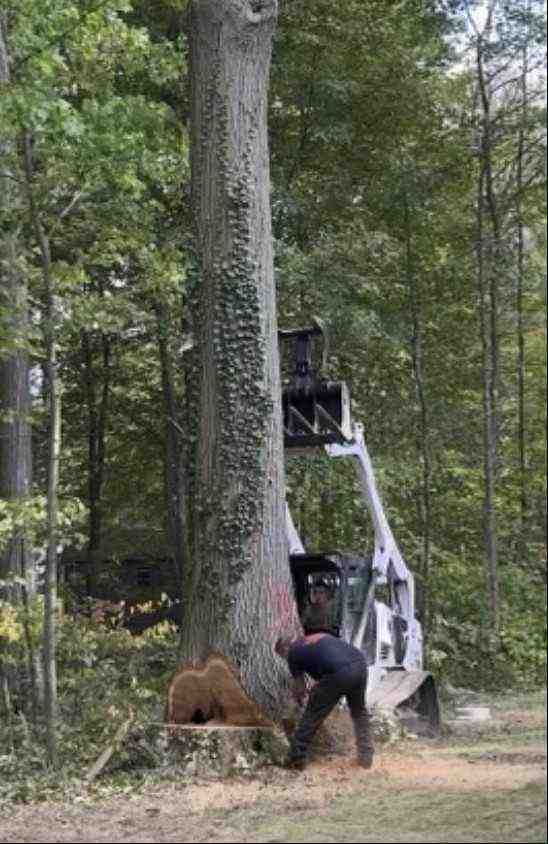
When our arborists are tasked with cutting trees down, it's not just about wielding a chainsaw; it's a carefully planned operation rooted in physics and precision. The goal is always to control the fall completely, ensuring safety for people and property alike.
Felling Direction and Fall Zone Calculation
Determining the felling direction is the first critical step. Our team considers:
- The tree's natural lean: As discussed, this is a primary factor.
- Obstacles: Buildings, fences, power lines, and other trees.
- Clearance: Ensuring there's enough space for the tree to land without causing damage.
- Wind: Current and forecasted wind speed and direction play a significant role.
Calculating the fall zone involves estimating the tree's height and then clearing an area at least 1.5 to 2 times the tree's height in the intended direction of fall. This wide margin accounts for any unexpected shifts or bounces.
Planning Escape Routes
Before any cuts are made, our team establishes clear escape routes. These are pre-determined paths, typically at a 45-degree angle away from the direction of the fall, allowing the arborist to quickly and safely retreat once the tree begins to move. These routes are cleared of any brush or obstacles to ensure a swift exit.
The Physics of the Hinge
The "hinge" is the unsung hero of controlled tree felling. It's a strip of wood left intact between the notch cut and the felling cut. OSHA's eTool on logging emphasizes that the backcut must leave "sufficient hinge wood to hold the tree to the stump during most of its fall so that the hinge is able to guide the tree's fall in the intended direction."
Why is the hinge crucial for control?
- Directional Control: The hinge acts like a rudder, steering the tree precisely where it's intended to fall. Without it, the tree could twist, barber-chair, or fall unpredictably.
- Prevents Kickback: The hinge provides a stable connection, reducing the risk of the tree snapping back towards the feller.
- Slows the Fall: It helps to control the speed of the fall, allowing the arborist to move to safety.
Specialized Tools
Professional tree removal goes beyond a single chainsaw. Our arborists use a suite of specialized tools to ensure safety and precision:
- Felling Wedges: These are inserted into the backcut to prevent the saw from pinching and to help push the tree over in the desired direction. For larger trees, these are indispensable.
- Ropes and Pulleys: For trees with a difficult lean or those in confined spaces, ropes and pulleys are used to create tension, guiding the tree's fall and providing an extra layer of control. In extreme situations, a winch might even be used for maximum power and safety.
- Breaking Bars/Impact Bars: These tools provide leverage to help direct smaller trees or assist with wedging.
These tools, combined with expert knowledge, allow our team to manage even the most challenging tree removals in Northeast Ohio.
The Professional Technique for cutting trees down
The actual process of cutting trees down involves a sequence of precise cuts that, when executed correctly, allow for unparalleled control over the tree's fall. This is where professional training truly shines.
Felling Cuts Explained
- Notch Cut (or Face Cut): This is the first cut and determines the direction of the fall. It's made on the side of the tree where we want it to land. It involves two cuts: a downward-sloping top cut and a horizontal bottom cut that meets the top cut, removing a wedge of wood. This notch should typically penetrate about 20-30% into the tree's diameter. The precision of this cut is paramount.
- Back Cut: This cut is made on the opposite side of the tree from the notch, slightly above the apex of the notch. The critical part here is leaving that "hinge" of uncut wood between the back cut and the notch. This hinge is what guides the tree's fall.
The Precision Required to Avoid Splitting or Barber-Chairing
Improper cuts can lead to dangerous situations like:
- Barber-Chairing: This occurs when the tree splits vertically up the trunk during the fall, often violently and unpredictably, creating a dangerous "barber's chair" shape. This is usually caused by an inadequate hinge or an improperly placed back cut, and it can send the trunk whipping back at the feller.
- Splitting: If the notch is too deep or the back cut is made without proper consideration for the hinge, the tree can split prematurely, leading to a loss of control.
Our arborists are trained to make these cuts with pinpoint accuracy, ensuring the hinge is perfectly formed and the tree falls cleanly.
Chainsaw Operation Dangers
Even with the right cuts, operating a chainsaw carries significant risks. The most infamous is kickback, which happens when the saw chain on the tip of the guide bar strikes an object or gets pinched, causing the saw to violently jerk back towards the operator. It's a terrifying experience that can cause severe injury.
Professionals mitigate kickback by:
- Using chainsaws with functioning chain brakes.
- Maintaining a firm grip with both hands.
- Avoiding cutting with the tip of the guide bar.
- Ensuring the chain is sharp and properly tensioned.
OSHA provides comprehensive OSHA chainsaw safety guidelines that our teams rigorously follow, including checking controls, chain tension, and never fueling a hot or running saw. This commitment to safety is why you can trust our team at Veneer Tree Services to handle your tree removal needs.
After the Timber: Professional Limbing, Bucking, and Cleanup
Once the majestic tree has safely fallen, the work is far from over. The professional process of cutting trees down extends to the meticulous and safe processing of the felled timber. This stage, known as limbing and bucking, carries its own set of dangers that require expertise and caution.
Limbing Defined
"Limbing" is the process of removing branches from the main tree trunk. While it sounds straightforward, it's fraught with potential hazards, particularly from "spring poles."
- The Risk of Spring Poles: Branches, especially those under tension from being bent or trapped under the main trunk, can act like coiled springs. If improperly cut, they can snap back with tremendous force, causing serious injury.
- Stored Tension in Branches: Our arborists are trained to identify branches under tension and release them safely, often by making small relief cuts before the final cut. They also know to stand on the uphill side of the tree when limbing and bucking, and to be sure of their footing, evaluating the area to ensure the tree isn't hanging from another or wedged in a dangerous position.
Bucking Defined
"Bucking" refers to cutting the main trunk and larger branches into manageable sections, typically for firewood, lumber, or disposal. Again, this isn't simply sawing through wood.
- Preventing Chainsaw Pinch: A common issue is the chainsaw bar getting pinched as the wood settles under its own weight. Professionals employ techniques like cutting from both sides or using felling wedges to keep the cut open. We also know to cut three-quarters of the way through logs to avoid touching the ground, which can dull or damage the chain.
- Log Rolling Hazards: Large logs are incredibly heavy and can roll unexpectedly, especially on uneven terrain or slopes. Our team uses specialized tools and techniques to stabilize logs and ensure they don't shift during cutting or cleanup.
Debris Removal and Stump Grinding
After limbing and bucking, the site is often littered with branches, sawdust, and the remaining tree stump. Our Tree Removal Service includes comprehensive debris removal, leaving your property clean and tidy.
For the stump, we offer professional stump grinding services. While stump removal involves completely extracting the stump and roots, leaving a clean slate, stump grinding is a more efficient and less intrusive method. It grinds the stump down below ground level, making it disappear from sight and allowing you to reclaim the space. This prevents the stump from becoming a nuisance or a home for damaging pests like termites or carpenter ants.
What to Do with the Wood
After the hard work of cutting trees down and processing the timber, the question often arises: what do we do with all this wood? Our professional services extend to helping you manage the wood responsibly and efficiently.
Wood Processing and Firewood Preparation
For those interested in using the wood for firewood, we can cut the bucked logs into appropriate lengths, typically 16-18 inches, suitable for most fireplaces and wood-burning stoves.
Green wood doesn't burn well; it creates a lot of smoke and can lead to creosote buildup in chimneys, which is a fire hazard. That's why proper seasoning is crucial. Firewood needs about six to twelve months to season properly. Our experts can advise on best practices for storing your seasoned wood:
- Stack it off the ground: This prevents moisture absorption and allows for better air circulation.
- Store it away from the house: Firewood can be a haven for rodents, bugs, and other critters, so keeping it several feet away from your home discourages unwanted visitors.
- Cover the top: Protect the stack from rain and snow, but leave the sides open for airflow.
Best Wood Types for Heat Value
Not all wood burns equally. The heat value of firewood is largely determined by its density and moisture content. Denser woods produce more heat. According to the University of Arkansas, some of the best trees for heat value include:
- Hickory
- Oak (Red or White)
- Black Locust
- Honeylocust
These species are abundant in our service areas of Northeast Ohio, including Cuyahoga, Geauga, and Lake Counties.
You can learn more about the specific heat values of different woods at Best wood types for heat value.
Hauling Services
If you don't need the wood for firewood or other uses, our team provides comprehensive hauling and disposal services. We can remove all wood, branches, and debris from your property, leaving it clear and ready for your next project. This is part of our extensive Lot Clearing Northeast Ohio services, ensuring that whether you're clearing a small plot or a large area, the job is done thoroughly and professionally.
Red Flags: When DIY Is a Definite Don't
While the idea of tackling a tree removal yourself might seem appealing, there are critical situations where attempting to cut down a tree without professional help is simply too risky. These are the red flags that should immediately prompt you to call in the experts.
Large Trees
Any tree that is larger than what you can comfortably handle with a standard chainsaw, or that is taller than your house, falls into this category. The sheer weight and unpredictable nature of a large tree during a fall can cause catastrophic damage or severe injury. As LawnStarter aptly puts it, "Cutting down a large tree is often reason enough to call in a professional."
Trees Near Power Lines
This is arguably the biggest red flag. Trees near power lines pose an extreme risk of electrocution. Our professionals are trained to work safely around power lines, often coordinating with utility companies to de-energize lines if necessary. Do not attempt to prune or remove a tree that is anywhere near electrical wires.
Trees Close to Buildings
A tree leaning towards your home, garage, or any other structure is an accident waiting to happen if not handled expertly. Even a slight miscalculation in fall direction can lead to thousands of dollars in property damage. Our arborists use advanced rigging techniques to ensure trees are felled safely away from structures.
Diseased or Dead Trees
These trees are highly unpredictable. Internal rot and decay can make them structurally weak, meaning they could split, break, or fall unexpectedly during the cutting process. What looks solid on the outside might be a hollow shell within. These are often referred to as "widowmakers" because of their inherent danger.
Unstable Root Systems
Trees with compromised roots, perhaps from construction, disease, or strong winds, can be extremely unstable. They might not fall in the expected direction or could even uproot entirely during the process, posing a severe hazard.
Trees on Steep Slopes
Uneven or steep terrain complicates every aspect of tree removal, from assessing the fall direction to ensuring safe escape routes. Logs can roll downhill uncontrollably, and the tree itself might behave unpredictably.
Emergency Situations
After a severe storm, trees can be partially fallen, hanging precariously, or tangled in power lines. These are highly dangerous scenarios that demand immediate professional attention. Our 24/7 expert tree removal services in Northeast Ohio are specifically designed for these situations. If you're facing such a situation, consult our Emergency Tree Removal Guide.
If you find yourself asking, "Can I ensure my safety and the safety of others when I’m cutting a tree down? Can I ensure the safety of my property or my neighbors’ property? Do I have the proper equipment? Do I feel confident in my skills?" and the answer to any of these is "no," then it's time to call a professional.
Legal Considerations for cutting trees down
Beyond the immediate dangers, there are often legal factors to consider before cutting trees down on your property. Ignoring these can lead to fines, legal disputes, or even criminal charges.
- Tree Preservation Orders (TPOs): In many municipalities, certain trees are protected by TPOs, which prevent their removal or even significant pruning without special permission. These orders are put in place to protect trees of amenity value.
- Conservation Areas: If your property is located within a designated conservation area, there might be blanket protections for all trees, requiring approval for any work.
- HOA Rules: Homeowners' Associations often have their own regulations regarding tree removal, especially for trees that are visible from common areas or that might impact shared property.
- Municipal Codes: Local city or county ordinances can dictate when and how trees can be removed, particularly for larger trees or those near property lines. For example, in Mentor, Ohio, residents typically need a permit for certain tree removals to ensure compliance with local regulations.
- Wildlife Protection: It's an offense under laws like the Wildlife and Countryside Act 1981 (in some regions) to damage active bird nests or bat roosts. Professionals always check for these before undertaking any work and will postpone if necessary to protect wildlife.
Navigating these regulations can be complex, and ignorance is rarely an excuse. Our team at Veneer Tree Services is familiar with the local regulations in Northeast Ohio, including areas like Cleveland, Mentor, Aurora, and Gates Mills. We can help you determine if permits are required and guide you through the process. To understand more about the requirements, check out our guide: Do I Need Permit to Remove Tree?.
Frequently Asked Questions about Professional Tree Removal
When considering tree removal, many questions naturally arise. We're here to provide clear, professional answers.
Why is professional tree removal so much safer than DIY?
Professional tree removal is inherently safer because it combines unparalleled expertise with specialized resources. Here's why:
- Professionals Carry Liability Insurance: Accidents happen, even to the most experienced arborists. Our team is fully insured, meaning that in the unlikely event of damage to your property or an injury, you are protected. DIY removal leaves you fully liable for potentially catastrophic costs.
- Expertise in Assessing Hidden Risks: As we've discussed, our certified arborists are trained to identify hidden dangers like internal rot, disease, structural weaknesses, and complex fall patterns that a layperson would easily miss. This detailed assessment is the foundation of a safe removal plan.
- Use of Specialized Safety Equipment: We invest in professional-grade tools and safety gear, from advanced rigging systems to state-of-the-art chainsaws and comprehensive PPE. This equipment is designed for maximum safety and efficiency in demanding situations.
- Controlled Felling Techniques: Our arborists employ precise, controlled felling techniques, utilizing notches, hinges, wedges, and ropes to guide the tree's fall exactly where intended. This minimizes the risk of damage to surrounding property and ensures the safety of everyone in the vicinity.
What's included in a professional tree removal service?
When you hire Veneer Tree Services, you're getting a comprehensive, end-to-end solution designed for your peace of mind. Our typical tree removal service includes:
- Initial Consultation: We start with a thorough on-site visit to evaluate the tree, assess your needs, and discuss the best approach.
- Hazard Tree Assessment: Our arborists conduct a detailed assessment to identify all potential risks, documenting them on our Hazard Tree Assessment Form.
- Safe Felling and Removal: The tree is expertly cut down using controlled techniques to ensure it falls safely and in the intended direction.
- Limbing and Bucking: The felled tree is processed by removing branches (limbing) and cutting the trunk into manageable sections (bucking).
- Complete Debris Cleanup: We don't just leave a mess behind. All branches, wood, and debris are removed from your property, leaving it clean and tidy.
- Optional Stump Grinding: For an additional service, we can grind the remaining stump below ground level, eliminating trip hazards and allowing you to replant or landscape the area.
How much does professional tree removal cost?
The cost of professional tree removal is an investment in safety, property protection, and peace of mind. While DIY might seem cheaper upfront, the potential costs of mistakes—like property damage, personal injury, or legal fees—can far outweigh the price of professional service.
The exact cost of tree removal varies widely based on several factors:
- Tree Size: Taller, wider trees require more labor, specialized equipment, and greater risk management.
- Location and Accessibility: Trees in confined spaces, near structures, or on steep slopes are more challenging to remove than those in open areas.
- Tree Condition: Diseased, dead, or storm-damaged trees can be more unpredictable and dangerous, requiring specialized techniques.
- Type of Tree: Some tree species are harder to remove due to their wood density or growth patterns.
- Additional Services: Costs can increase if you opt for stump grinding, wood hauling, or require emergency services.
For general estimates and to understand how these factors influence pricing, please consult our Tree Removal Cost Chart. For an accurate quote custom to your specific situation in Northeast Ohio, we always recommend a personalized consultation.
Conclusion
As we've explored, cutting trees down is a task laden with significant risks and complexities. From the intricate science of assessing a tree's lean and planning its fall, to the precision required for felling cuts and the dangers inherent in chainsaw operation, this is a job that demands far more than just brute force. The potential for kickback, falling branches, property damage, and personal injury is simply too high for a DIY approach.
The value of professional expertise, specialized equipment, comprehensive insurance, and an unwavering commitment to safety cannot be overstated. Our team at Veneer Tree Services brings decades of experience to every job, ensuring that your tree removal is handled safely, efficiently, and with the utmost care for your property in Northeast Ohio, including areas like Chagrin Falls, Gates Mills, Mentor, and Cleveland.
Don't let the allure of DIY lead to costly mistakes or, worse, tragic accidents. For safe and efficient tree services, trust the experts who understand the science and the risks. Contact us for all your tree service needs today.


.png)
.png)